Why Timing Is Crucial in Prospecting
When prospecting, it is essential to understand where the target company stands in its lifecycle. Prospecting at the right time means identifying critical moments in a company’s life and reaching out when your solution can deliver the most value. From inception to growth, and eventually through to the end of operations, each phase of a company’s life comes with specific needs. Identifying these moments and understanding when to reach out can have the greatest impact and is the key to effective prospecting.
According to a Forrester study, 57% of decision-makers prefer that sales reps contact them when the search for a solution has begun, but before a shortlist of potential vendors is defined. This means there is an ideal window where your outreach is not only welcome, but essential for influencing the decision.
InsideSales.com also reports that contacting a prospect within five minutes of their interaction with a website or content is 21 times more likely to result in a qualified meeting than waiting 30 minutes. This figure shows that reacting quickly can radically transform the conversion rate of your prospecting efforts.
The Lifecycle of a Company: From Start to Finish
Every company goes through different phases during its lifetime, and each phase presents unique opportunities for well-timed outreach:
- Birth and Company Creation
- At this stage, the company is forming, looking to enter the market, and building solid foundations. Intent signals such as business registration announcements appear as ideal moments to offer consulting services, management tools, or solutions to help them get off to a strong start. For example, a newly launched company may need a CRM or an accounting solution.
- Growth Phase
- During the growth phase, the company is expanding, hiring, raising funds, and exploring new markets. Signals associated with this phase include fundraising rounds, new hires, office openings, or the adoption of new technologies. Well-timed prospecting in this phase means offering solutions tailored to this expansion and supporting growth.
- Maturity
- As the company reaches maturity, it focuses on consolidation and optimization. It aims to improve margins, streamline processes, and innovate to differentiate itself. Reaching out at the right time in this phase is crucial for proposing integration solutions and services that optimize existing operations.
- Decline and Restructuring
- When a company starts facing difficulties, you may observe buying signals such as layoffs, restructurings, or announcements of financial challenges. These are opportune moments for approaching with consulting solutions, crisis management, or cost optimization to help overcome this difficult phase.
- End of Life or Acquisition
- When the company decides to cease operations or is acquired, commercial opportunities shift. If a company is acquired, new opportunities may emerge for integrating services between two entities, or for proposing digital transformation solutions during the post-acquisition integration phase.

Key Figures That Illustrate the Importance of Good Timing
To understand the importance of timing and why prospecting at the right moment is crucial, let us examine some figures that demonstrate the impact of targeted, well-timed outreach:
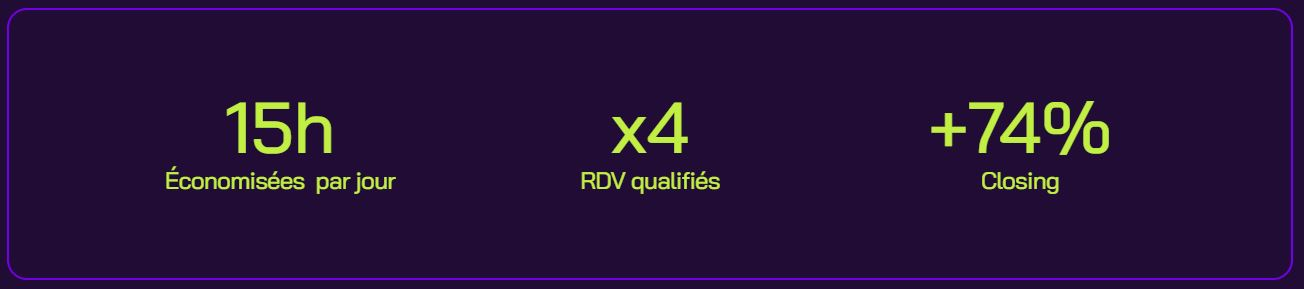
Four Times More Meetings
Companies that use intent signals to detect the best moment for outreach see the number of meetings booked multiply by four, compared to cold prospecting. This gain is directly tied to message relevance and timing.
+74% Closing Rate
A study by Aberdeen Group shows that accounting for contextual and temporal insights during outreach can increase the conversion rate by 74%. When a prospect is going through an expansion or strategic change, they are more likely to be receptive to an offer that helps them tackle new challenges.
83% of B2B Buyers
consider it important or very important that vendors understand their business at the moment of contact, according to CSO Insights. This means not only knowing what to say, but also knowing when to say it.
How to Identify the Right Timing
To understand when your prospects are ready to listen, it is essential to rely on relevant buying signals. These signals are behavioral or contextual indicators that show a prospect is in a phase of reflection, need, or change that makes them open to your proposals. Here is how to leverage these signals for perfectly timed outreach:
Monitor Key Moments in the Company’s Life
Fundraising rounds, intensified hiring, and the adoption of new technologies are events that indicate the company is in an investment dynamic. For example, contacting a company within 30 days of a fundraising announcement increases your conversion chances because it is the ideal moment to address their needs.
Analyze Interactions and Intent
Prospect interactions with your content, repeated visits to certain pages, or social media engagement can provide clues about the right moment for outreach. InsideSales demonstrated that responding to expressed prospect interest within 10 minutes improves lead qualification chances by 400%, highlighting the importance of acting promptly.
The Importance of Intent Signals and Real-Time Action
Using buyer intent data is therefore essential for determining the best moment for contact. A company can enter your prospecting radar at various points in its life: at its creation, when it starts hiring, when it adopts new technology, or when it faces challenges. Well-timed prospecting allows you to capitalize on these phases and act with relevance.
Did you know that a buying signal only holds value for 48 hours? If you contact a company beyond that window, you will see the same results as cold outreach.
One of the major strengths of intent signals is the ability to act in real time as soon as a company appears on your prospecting radar. Identifying and exploiting these signals as they occur allows you to be the first to propose a solution, before competitors have even spotted the opportunity. Modern signal analysis tools capture this information and trigger immediate commercial action. This not only ensures well-timed outreach but also accelerates results.
HubSpot reports that reps who contact a lead within one hour of an expressed intent have a conversion rate up to 7 times higher. This is precisely the importance of good timing: being there when the prospect is in a state of maximum receptivity.
Good Timing Is Not Optional, It Is a Success Driver
Timing is a decisive factor in B2B prospecting, capable of transforming your results dramatically. Cold prospecting, which ignores opportune moments, is costly and inefficient. In contrast, an approach based on intent signals and real-time action allows you to reach your prospects when they are ready to listen and act. This considerably increases the chances of success.
Intent signals allow you to focus on prospects who are ready to buy and approach them at the best moment. By capturing these signals in real time, you ensure you arrive before your competitors, at the precise moment when the need arises. This strategy not only improves the results of your prospecting campaigns but also builds stronger relationships, based on a deep understanding of prospect needs, and above all, impeccable timing.
Why the Signal Replaces the Follow-Up Sequence
At Rodz, each detected signal generates a single personalized message, sent within 48 hours of the event. Unlike sequences of 5 to 8 automated follow-ups, this approach rests on a simple principle: if the timing is right, a single touchpoint is enough. On average, Rodz detects 4 actionable signals per company per year, creating as many relevant contact opportunities without ever saturating the prospect’s inbox.
Frequently Asked Questions
Why is timing so important in B2B prospecting?
A prospect contacted within 48 hours of a relevant buying signal is 4 times more likely to accept a meeting. Beyond that window, the opportunity closes: the need is satisfied elsewhere or the prospect is already solicited by others. Timing transforms a cold call into a relevant conversation.
How do you identify the right moment to contact a prospect?
Monitor trigger events: hiring for a role related to your offering, a fundraising round, or the appointment of a new decision-maker. Rodz detects these events in real time and alerts your teams immediately. Each company presents an average of 3 to 4 actionable signals per year.
Should you send follow-up sequences after a buying signal?
No, classic follow-up sequences (5 to 7 automated emails) are less effective with signals. The principle is: 1 signal = 1 contextual message. If the prospect does not respond, wait for the next relevant signal rather than following up without new context.