Why Timing Is Crucial in Prospecting
Where a target company sits in its lifecycle changes everything about whether your outreach lands or gets ignored. A Forrester study found that 57% of decision-makers prefer to hear from a sales rep after the search for a solution has started but before a shortlist gets drawn up. That’s the window. Miss it in either direction and you’re either too early to be useful or too late to influence the shortlist.
InsideSales.com puts a sharper number on the reactive side: contacting a prospect within five minutes of their interaction with a piece of content is 21 times more likely to produce a qualified meeting than waiting 30 minutes. Twenty-one times. The conversation hasn’t moved on yet; the problem is still live in their head.
The pattern holds at the company level too. Context conditions what a company needs, and what a company is open to hearing. An intent signal is exactly that: the context a company is in at a specific moment in time. A message that fits the context doesn’t feel like prospecting. It feels like timing.
The Lifecycle of a Company: From Start to Finish
Every company goes through different phases, and each one creates different openings for a well-placed message.
- Birth and Company Creation
- At formation, a company is setting foundations and entering the market for the first time. Intent signals like business registration announcements are exactly the moment to offer CRM tools, accounting solutions, or consulting. A freshly incorporated company hasn’t chosen its vendors yet.
- Growth Phase
- Hiring bursts, funding rounds, new office openings, technology adoption: these are the signals that tell you a company is in investment mode. Contacting a company within 30 days of a fundraising announcement puts you in the conversation when the budget is fresh and the problems are real.
- Maturity
- A mature company focuses on optimization, margin improvement, and differentiation. The right message here isn’t about scaling, it’s about integrating and streamlining what already exists.
- Decline and Restructuring
- Layoffs, announced restructurings, public statements about financial pressure: these aren’t comfortable signals to work with, but they’re real. Companies in difficulty need cost optimization, crisis consulting, or process efficiency, and they’re often more open to outside input than companies that feel safe.
- End of Life or Acquisition
- When an acquisition closes, two companies need to stitch their tools together. The post-acquisition integration phase creates genuine demand for connective technology and change management services.

Key Figures That Illustrate the Importance of Good Timing
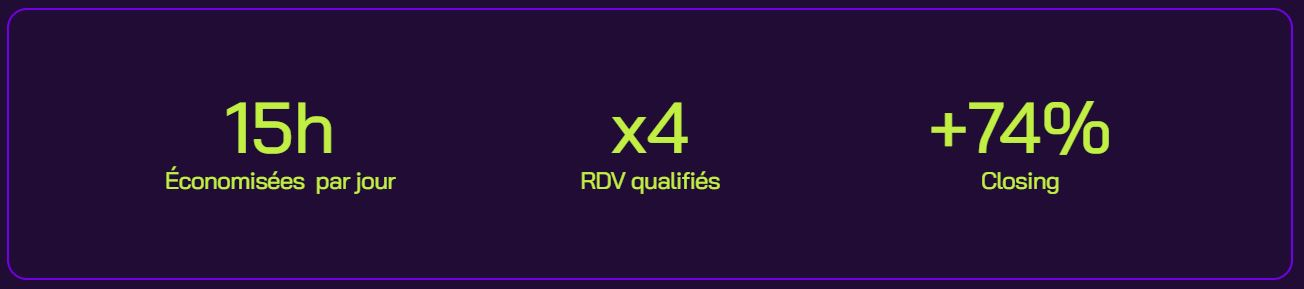
More Meetings
Companies that use intent signals to find the right moment for outreach book more meetings than those running cold prospecting campaigns. The gain comes from relevance, not volume.
A Higher Closing Rate
Taking contextual and timing signals into account during outreach makes conversion more likely. A prospect going through an expansion or strategic shift is more receptive to an offer that addresses the specific challenge in front of them right now.
83% of B2B Buyers
consider it important or very important that vendors understand their business at the moment of contact, according to CSO Insights. It’s not just what you say; it’s whether you’ve read the situation correctly before saying it.
How to Identify the Right Timing
The practical question is where these signals come from. The most reliable source is buying signals: behavioral or contextual indicators that place a company in a phase of reflection, need, or change.
Monitor Key Moments in the Company’s Life
Think of it this way: I want to contact a company when it raises a funding round, when it starts hiring aggressively, or when it adopts a new technology stack. Each of those events tells you something about the company’s current situation and the problems it’s actively trying to solve. Waiting for the next monthly data export means you’ll arrive after the moment has passed.
Analyze Interactions and Intent
Repeated visits to specific pages, content downloads, social media engagement: these interactions give you a secondary layer of signal. InsideSales found that responding to expressed prospect interest within 10 minutes improves lead qualification chances by 400%. The implication is that signals degrade fast, and waiting a week to act on them isn’t a strategy.
The Importance of Intent Signals and Real-Time Action
A buying signal only holds value for 48 hours. Contact a company inside that window and a reply is far more likely. Contact them on day five and you’re back to cold-list results. The signal hasn’t disappeared, but the context has moved on.
That’s the practical case for real-time signal production. Identifying a signal after the fact, from a frozen database export, doesn’t give you the 48-hour window. It gives you a historical record. Rodz produces its signals continuously and keeps its collection infrastructure up to date, specifically because a stale data pipeline makes the 48-hour window unreachable.
HubSpot’s data supports the same logic from a different angle: reps who contact a lead within one hour of an expressed intent see conversion rates up to seven times higher than those who wait. The mechanism is the same. Receptivity is highest when the context that created the need is still active.
Good Timing Is Not Optional, It Is a Success Driver
Cold prospecting pays a real cost for ignoring context. A message that arrives without a signal to anchor it has to work much harder, and usually doesn’t. The alternative isn’t sending more messages, it’s sending fewer messages at better moments.
Intent signals let you focus on companies that are genuinely in a context where your solution fits, and reach them before that context shifts. A meeting booked on a signal starts from a need the prospect already has, which is a structural difference, not a marginal improvement. When a company is in the right situation, the conversation is different from the start.
Why the Signal Replaces the Follow-Up Sequence
Rodz’s framework produces one personalized message per signal, sent within 48 hours of the event. No automated follow-up sequence. The logic is that a sequence of five to eight emails exists to compensate for missing context. When the context is right, one message is enough.
On average, Rodz detects four actionable signals per company per year. That’s four separate moments to send a fresh, relevant message, never a follow-up. The campaign feeds itself as long as the data flows, and each touchpoint is genuinely new rather than a reminder that the previous one was ignored.
Frequently Asked Questions
Why is timing so important in B2B prospecting?
A prospect contacted within 48 hours of a relevant buying signal is far more likely to accept a meeting. Beyond that window, the need gets satisfied elsewhere or the prospect is already in conversation with someone else. Timing turns a cold outreach into a relevant one.
How do you identify the right moment to contact a prospect?
Watch for trigger events: a hiring push for a role adjacent to your offering, a funding announcement, a new C-level appointment. Rodz detects these events as they happen and alerts sales teams immediately. Each company produces an average of four actionable signals per year.
Should you send follow-up sequences after a buying signal?
No. The principle at Rodz is one signal, one contextual message. If the prospect doesn’t respond, the right move is to wait for the next relevant signal rather than following up without new context. A sequence of five to seven emails is what cold outbound relies on because it has no signal to act on. You do.